
The 3% Problem
ChatGPT, the most popular LLM chatbot right now, clocks in at about 900 million weekly users. That's roughly 12% of the world's total population. Impressive on paper.
But only about 35 million of those users actually pay (Plus and Pro tiers). That's about 3% of all ChatGPT Users, or about 0.4% of all humans. While the flashy billions of dollars raised in funding and billion-dollar infrastructure projects sound massive (they are), AI penetration is effectively very little. Most humans haven't even touched the full power of AI, apart from the "draft an email to my boss so I don't need to work overtime today pls. sound human thx" prompts.
Zoom out, and you see a similar picture across all AI platforms. Across ChatGPT, Claude, Gemini and others, only 10% of knowledge workers across the world use paid AI. We are only at the beginning of AI adoption.
Yet, NASA used Claude to map out a path for their mars rover, the first time any AI model was used for this. Norway's $2.2 trillion sovereign wealth fund uses Claude to screen portfolios. 16 Claude AI agents wrote a C compiler from scratch in about $20,000. Claude Cowork's launch in January triggered a massive software sell-off, which wiped off $285 Billion in market capitalization in weeks. And many more such instances.
All of this, with just ~3% of paid users. The AI wave has just started, and the world is already reacting strongly. What happens when we hit 30%? 80%?
Here's what changes when it does.
Yes, John. AI Will Take Your Job.
Since the start of 2026, we have seen Claude Cowork, the (in)famous OpenClaw, and OpenAI Frontier, all agentic products that promise to automate life's tasks that fill up your day: to-do lists, making excel models, ordering food, drafting contracts, you name it.
As AI penetration improves and AI agents take on more work, we will see a massive uptick in GDP as production improves with lower inputs. This sounds good in theory, but a second-order effect of this would be people getting laid-off, as companies prefer to hold subscriptions and use APIs, with fewer humans overseeing these agents. The third-order effect is scarier as we'd notice that the increased GDP output will be put back into running AI agents, which would create a theoretically increased GDP, but with the benefits not actually flowing to humans and flowing through the real economy. Citrini Research released a memo, The 2028 Global Intelligence Crisis, that goes over this "Ghost GDP" that would exist.
The fundamental tension here is that the GDP measures the outputs and transactions. Even when countries wage wars, and assuming their countries don't get fully obliterated, they usually have an increase in GDP with the corresponding increase in production. This isn't an indicator of how well-off the people in that country are.
How quickly this plays out matters just as much as whether it plays out. The timeline is genuinely uncertain, with Citadel Securities arguing that AI adoption will follow an S-curve because of the constraints from data centre deployment, the energy supply challenges, and there are varying reports on whether unemployment will increase by much or remain fairly stable. These reports make sense for the short-term, because they are anchored on how the world looks today when we don't have the massive compute deployed. With so much capital flowing into AI and adjacent industries like energy, chips, data centres, I think the adoption curve will change as we achieve scale. The speed with which we achieve it will affect how white and blue collar workers are hit.
The challenge of the future would be sustaining humans, when we have an increasing abundance of intelligence and wealth, but fewer pathways to funnel the benefits of the resulting, flourishing economy into the pockets of people. One solution to this could be Universal Basic Income (UBI), the controversial policy that is already in discussions as a way of reducing poverty. UBI might end up going from a fringe, socialist concept to a mainstream one only because consumer spending would demand it. Regardless of whether UBI is the policy chosen by politicians, there is going to be restructuring of economies around the world coming up. The question would be if we do the restructuring proactively, or as a knee-jerk reaction.
But even if we solve the economic problem well, there's a deeper one waiting for us.
You Won't Have Meaning; You'll Have Convenience
So we have bigger GDPs, fewer jobs, and money coming into our pockets. Doesn't this solve the material problem?
Yes, but it also opens a deeper one.
As we have seen time and again, humans are not optimized for abundance. Every time we achieve abundance in something, we bring with it a respective crisis.
The abundance of food and calories brought with it the Obesity Crisis. The abundance of Social Media and online connections brought with it the Loneliness and Mental Health Crisis. With the abundance of information, we also see a misinformation crisis.
With AI making intelligence abundant, it'll be easy to prompt our way through life. We can have food delivered before we are even hungry, with agentic bots anticipating our needs and taking actions before time. Social Media is only going to get better, more personalized, and even more addictive. With more compute available, content is only going to get more hyper-personalized, tailored to everyone's individual contexts and values. Everything will get easier. We will have so much optimization.
This doesn't account for the one constant truth every human faces: mortality.
Ernest Becker described our careers as "immortality projects". Through work, we build something that outlasts us, and get a symbolic distance from this existential dread of being finite creatures. Careers give us a sense of purpose, even if constructed, and distract us from questions we'd rather not sit with. With AI rendering many professional careers redundant, it will dismantle the primary coping mechanism.
And there's the loss of struggle. Viktor Frankl, writing from concentration camps, argued that humans find meaning not through comfort, but from striving for something. The search for meaning is the meaning of life, and we find it in the struggle for worthy goals.
If we implement UBI, we might solve the joblessness problem by giving money, but then also take away the main reason people struggle and take up careers. Everyone's basic needs will be fulfilled, and we have access to so much. With so much abundance and convenience heading our way, where does the struggle come from?
We will have the most any generation of humans has had, only to have so little.
MaaS: The next unicorns
The post-AI generation is going to be struggling for meaning. So, introducing Meaning as a Service (or MaaS), startups will strive to help you find purpose.
People, if they don't drown in mind-numbing amounts of consumption, are going to want to find meaning. An entire industry will emerge out of this, which packages meaning in the form of spirituality, socialization, service to others, physical activity and sports, all in nice subscription packages. Maybe for as little as $10/month.
This could come as an app that assigns 90-day challenges. It uses AI to map out your interests and figure out relevant challenges: something like learning ceramics and then teaching it to others. It matches you with people to do the challenge alongside. And then the co-founders raise some $10 Billion dollars because, well, network effects. Meanwhile, the users (you) brag about how cool the app is and create FOMO for the non-users.

It sounds satirical, but think about it. This industry already exists: meditation apps, CrossFit and others. AI will make the demand for these explode.
But there's another way to find meaning: by doubling-down on AI instead of running away from it.
The Machine That Makes the Machine
If you have made it this far, you might be imagining a bleak future, with no jobs and no meaning, and an economy that revolves around AI.
Here's why it isn't bleak.
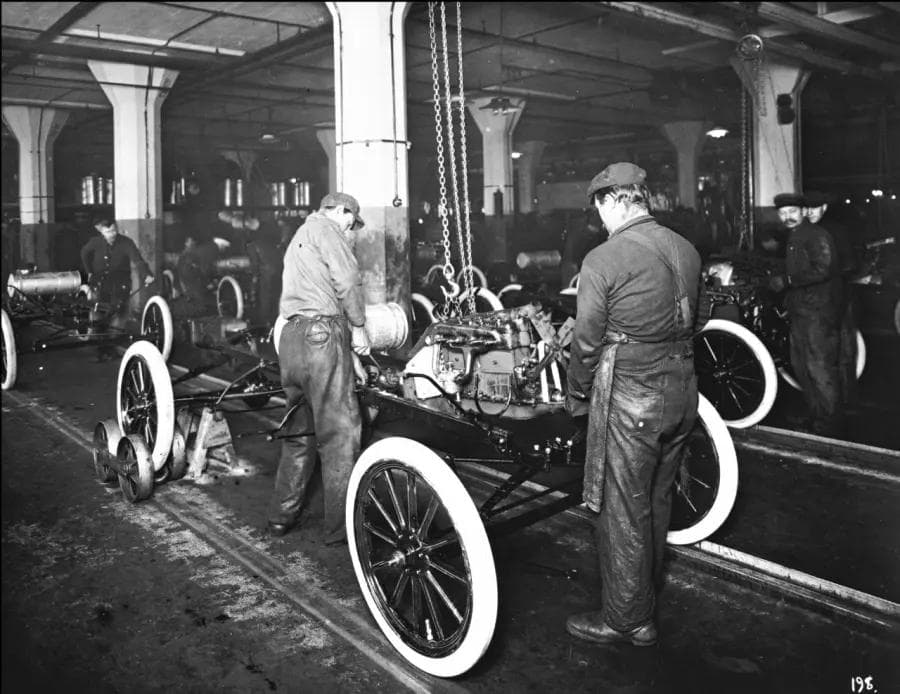
When Henry Ford created the famous Model T, it wasn't the Model T that he had contributed to the world. He designed an entire assembly line to make production cheaper and more efficient, which shifted the focus from the products to the machines that made them. It destroyed livelihood, for sure. But it also brought with it new roles and entirely new class of leverage to builders. Today, you can imagine and design a product, and have it shipped to the world– the physical artifact in the hands of people– in just a few months.
In 2016, Elon Musk described Tesla's Gigafactory in the same way: "The machine that builds the machine". The car was the product, but so was the factory, and the factory handed him the leverage to make products. First it was Tesla cars. Now it's the Tesla Optimus robots. With AI, you can build almost anything.
There is a dark side to AI, but there's also a silver lining. It might replace you, but also hands you leverage, should you choose to use it.
T-shaped Humans
Hey, I don't want AI to replace me. I want to work. I want to earn my money.
...but AI is so much faster and smarter than me. UGH!
Well, this can be solved if you are a specialist. Or a generalist. Whichever the experts said was better. Wait, why are we still debating this?
I think an entirely new archetype will come into being: T-shaped, or Pi-shaped humans.
This new archetype couples deep specialization in one (T-shaped) or two (Pi-shaped) domains, and pairs it with a broad, generalized understanding of many fields. While this idea has existed for a while now, we need to add a new layer of meta-skills on top. You need to not only know the skills themselves but also how they interact with each other, and work together to solve problems.
But education is dead. AI has access to infinite information. I can just ask AI to do the work. Education is redundant.
Sure, partially. AI does theoretically have access to "infinite information". But to drive AI well, you need to have judgement. And taste. And vision. Not just information.
If by being "skilled", you mean you know a lot of information, you are already being outcompeted by AI. You need to understand what's good, what's enough, what fields should interact to solve a given problem. Deep domain expertise paired with knowledge across multiple fields is the way forward.
Being able to use AI is table stakes. The people who still work are the ones with a vision that these tools can serve. The ones who have experience, taste, specific knowledge, as Naval Ravikant would put it. Coding might be dead, but software engineering won't be. Building skills isn't going to go out of fashion, but it will become increasingly easier to justify not learning more.
In practice, this looks like a CS Major with a business minor, working on backend systems at a startup, leading Alberta's Largest Hackathon, reading geopolitics on the side: someone who works across domains instead of within one.
Agency
When you have access to being able to do literally anything you can imagine, the limits of AI are really only the limits that you have. You need to have agency to use agentic tools and create the AI-utopia we want. Otherwise, you will end up creating an AI-dystopia.
The post-AI world is only going to amplify what high-agency people want. High-agency people have changed the world for centuries, for better and for the worse, and their impact on the world is only going to increase with AI in their hands. The low-agency people are just going to sit on the sidelines, watching.
If you want to still work and build in this new AI-enabled future, work towards building T-shaped or Pi-shaped expertise. The era of pure specialists and pure generalists is fading. And it's not a coincidence that people with T-shaped or Pi-shaped expertise tend to be high-agency. Otherwise who else in their "right minds" would study hard skills like coding and system design, but also learn about art, philosophy, and behavioural psychology? The people with high agency.
And this isn't hypothetical anymore. AI is already finding its way into the physical world.
The Robots are here
AI can do so much, but only in the digital world. They can manipulate data, make decisions, reason through things, and that does have a lot of implications. It still is very abstract, with tokens and context and random benchmarks being thrown around for people to make sense of their capabilities. Robotics will be the physical manifestations of intelligence, being able to manipulate the physical world. Through robots, AI will now have a hand in changing the physical world (pun-intended) we live in.
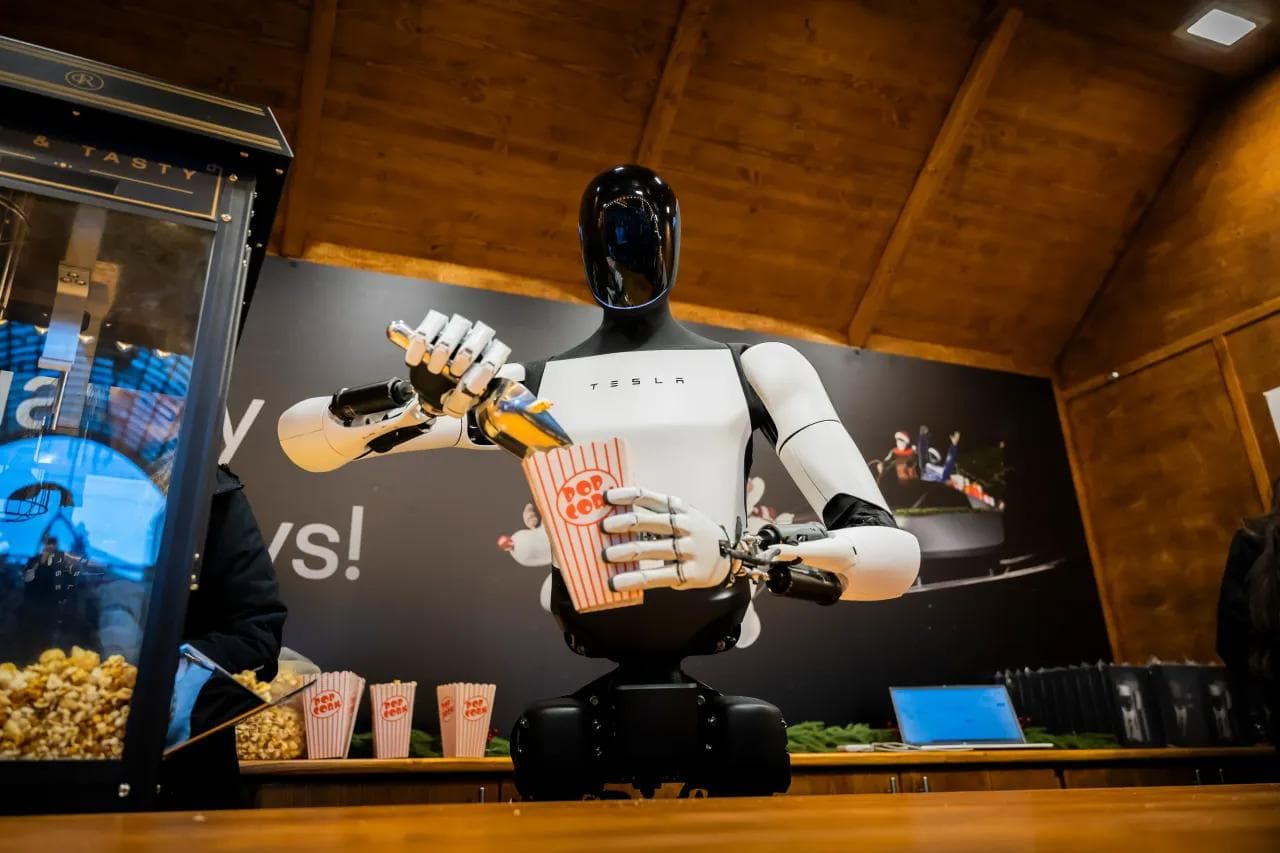
Gone are the days when Boston Dynamics' Spot would do cool tricks on YouTube videos. We now have humanoids rolling off of assembly lines. I would be lying to you if I said these versions are the ones that will change the world. But they are already pretty decent. In 2025, Tesla added a diner to one of their superchargers where their Optimus line of robots would serve popcorn to you and could also perform cute little tricks like those Turkish ice cream vendors. In the future, robots could be your barista at the local café, or could go on intergalactic missions to plant the flag of humanity on distant planets (ironic?).
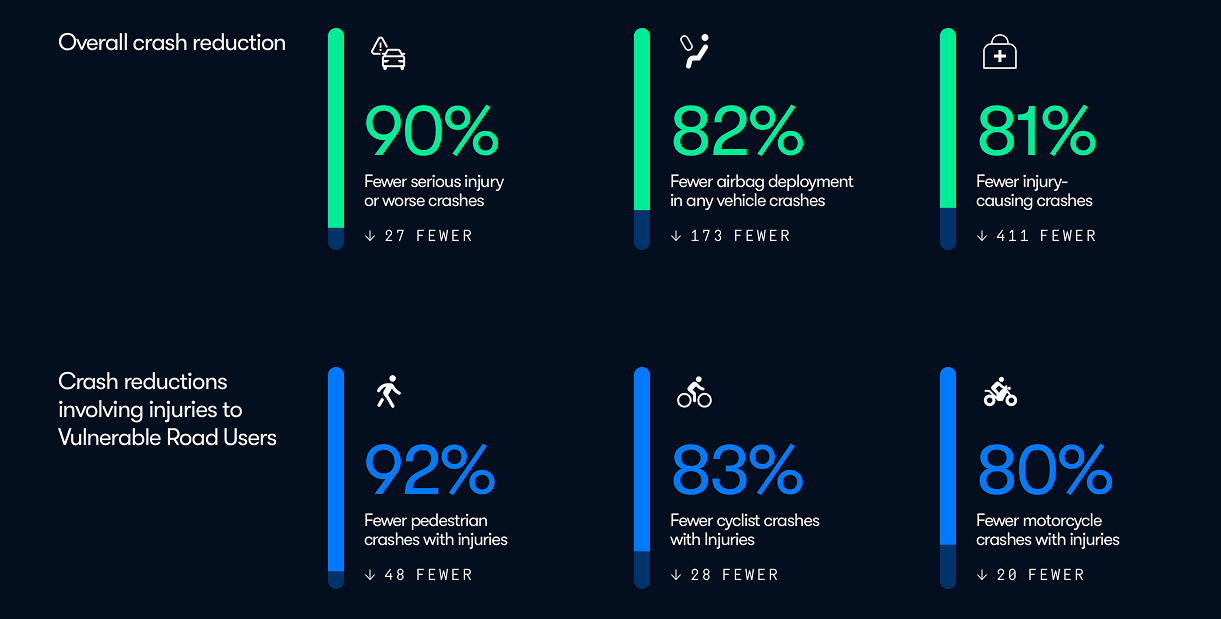
Tesla and Waymo are already offering fully-automated, driverless taxicab rides in select cities. They aren't perfect. There are videos of Waymos bugging-out, or getting stuck in loops. But in the big-picture, Waymo has a safer track-record than most human drivers. And by a lot. And this is only going to get better with the recent Waymo World Model which allows them to train on rare edge-cases that can be catastrophic without having to go through them in real life.
With AI agents handling cognitive work, and robots handling mechanical work, it's only going to get easier to fall into low-agency, consumption ditches. Moreover, this reality isn't distant. As discussed above, you can see that this is actively unfolding right in front of us.
Closing Thoughts
The future may not play out exactly like this, but the overall direction is clear: develop agency, and build deep domain expertise, along with generalized knowledge of other fields.
Intelligence will be abundant. Meaning will be scarce. But the curious, high-agency people are here to stay.